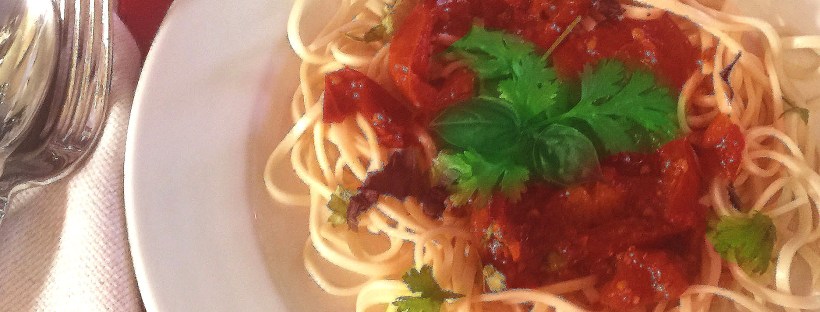
My Baked Tomato Sauce is so EASY to make! The magic is in the fresh ingredients. No more stirring and simmering over a hot stove.
. . . .
INGREDIENTS
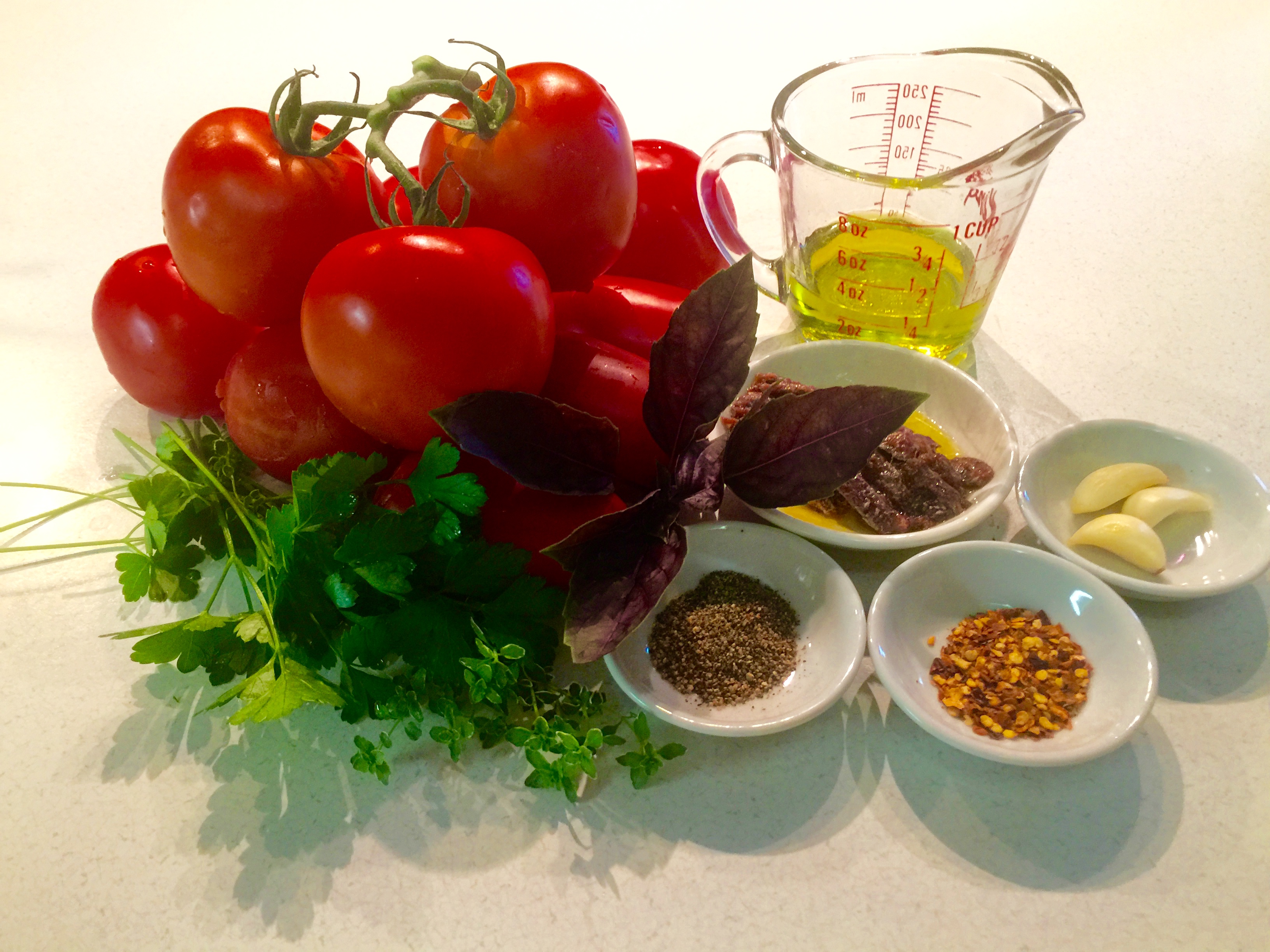
2 lbs or 1 kg tomatoes
1 small tin anchovies (drained and diced)
3 cloves garlic sliced
1/2 tsp.(2ml) freshly ground black pepper
1/2 tsp.(2ml) hot red chili flakes (optional)
1/4 tsp. (1ml) salt (optional)
1/4 cup (50 ml.) extra virgin olive oil
1/4 cup (50ml.) chopped fresh basil or parsley
add 6 thyme sprigs (optional / recommended) and/or sliced onions before baking.
DIRECTIONS
1) Preheat oven to 350F(160C)
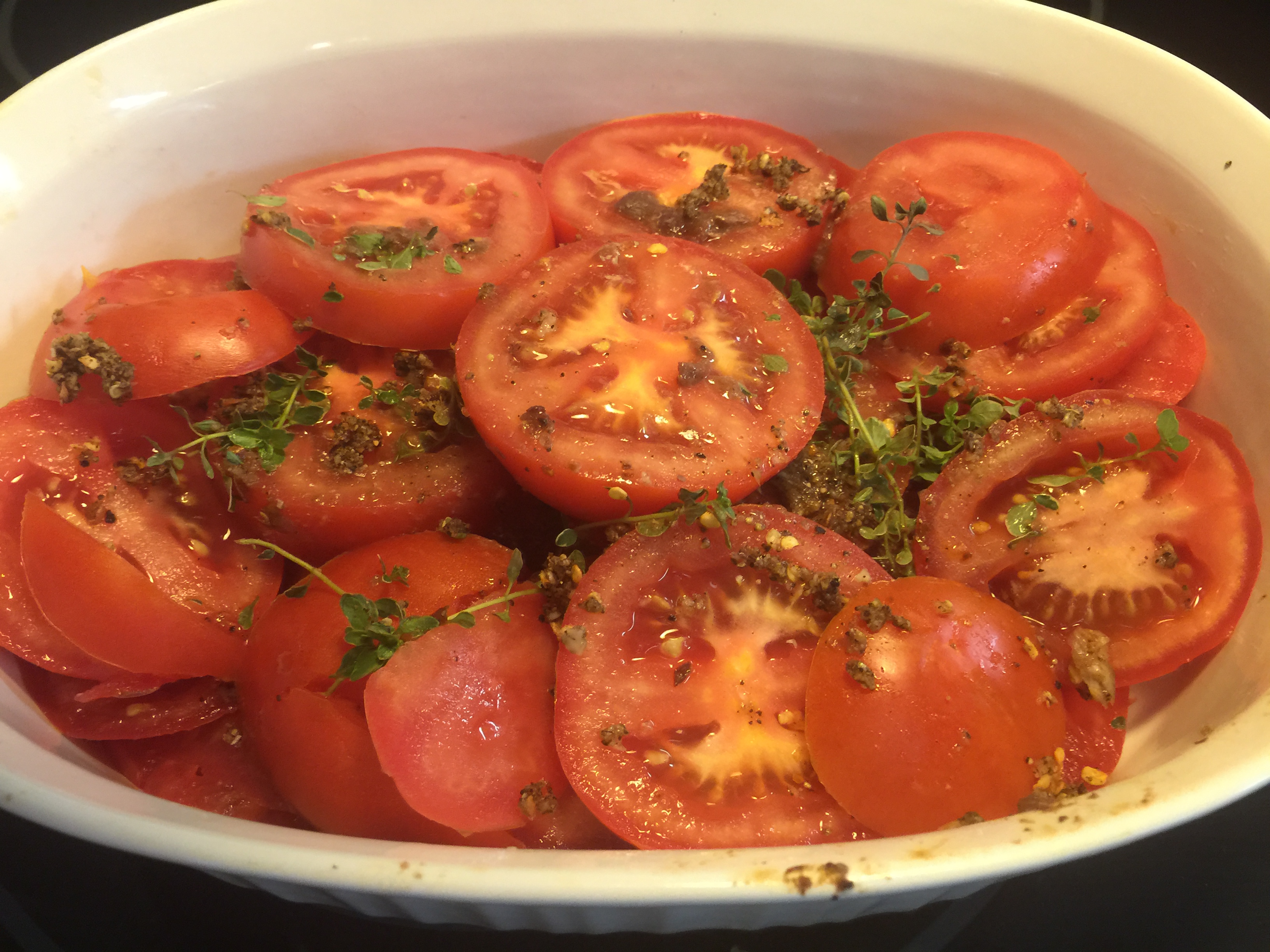
2) Slice tomatoes into 1/2″ (1 cm.) slices and layer in a casserole dish with the chili flakes, anchovies, garlic and pepper. Optionally add salt as well. Pour olive oil on top.
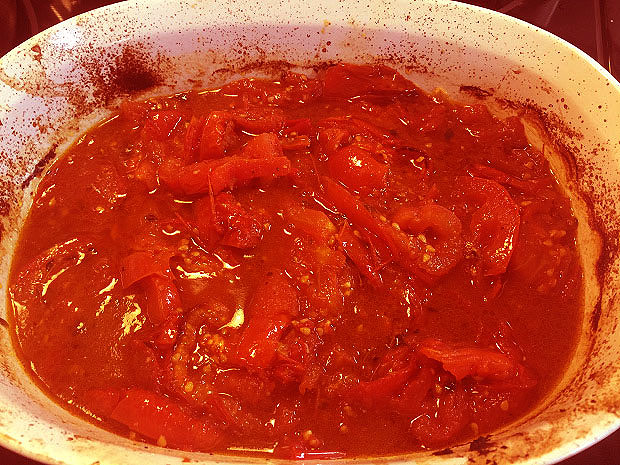
3) Roast in the oven for 1 hour or until the tomatoes are soft and caramelized.
4) Keep warm and cook your pasta.
5) Toss pasta with sauce and sprinkle with the basil or parsley.
IN DEPTH:
Read more….
Interesting back story
Please click “HERE“.
The CLASSIC PASTA DISH (Home made)
DID YOU KNOW?HEIRLOOM Tomatoes are increasing in popularity by the organic veggie consumers because they are a more natural and flavourful fruit. TOMATOES are armed with healthy Lycopene fighting free radical and the UV tomato skin battles cancer cells – every time you eat a tomato. The amount of bioavailable lycopene increases by cooking the tomato compared to eating them raw. When you add a bit of healthy fat like olive oil, your body absorbs the lycopene more readily – four times more in fact. That’s how you maximize the body readiness of carotenoids from a tomato.This popular nightshade fruit is more powerful than an apple. Like carrots, the tomato is also good for your eyes.
I felt a little trepidation making my baked tomato sauce and serving it to a friend who grew up in Italy. I actually made the sauce as an accompaniment to taste test some zucchini pasta which I cut in different sizes.
Zucchini Pasta – Two Different Shredders
KAMUT pasta:
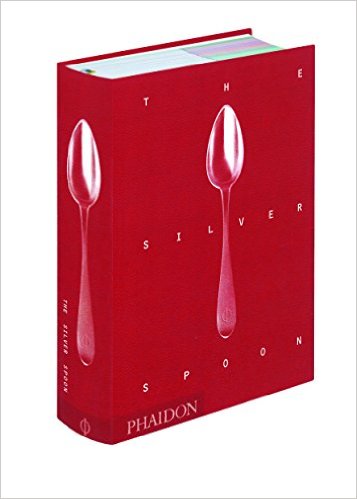
I also served Kamut pasta* as a comparison to the zucchini pasta. The zucchini pasta had no votes and it was agreed that it would be a palatable side dish but the baked tomato sauce got rave reviews. I was told that in Italy they do not make tomato sauce in the oven. My friend told me that Italians will cook their sauce on the stove top but don’t bake anything in the oven unless absolutely necessary so they will not heat up the house. They tend to grill their meat as well. Again no oven to keep the heat down. I pulled out my edition of “The Silver Spoon” which is a major Italian cookbook , a kitchen reference work originally published in 1950. It was only translated to English 10 years ago. This would be similar to our “Joy of Cooking”. Indeed there was no reference to a baked tomato sauce in this Italian cooking bible. When you bake the tomato sauce the tomatoes take on a concentrated sweet flavour almost like sun-dried tomatoes or tomato paste. It is really delicious.
This recipe has anchovies which I hate. You do not tasted the anchovies in this sauce. It disappears and just adds that mysterious taste that is referred to as umami. Now you know what umami tastes like if you didn’t before. This is it. Another guest was an anchovy hater as well but loved the sauce and didn’t notice the anchovies.
FOOD TIP: When I researched baked tomato sauces, some recipes strained the tomatoes for a smooth texture. Since all my guests raved about the chunky tomatoes, I always serve my sauce in the yummy, chunky version. You can use this sauce for spicy minestrone soup, Italian meatloaf, poached fish, chili, rice and ratatouille.
*Kamut is an ancient form of wheat. While its probably lower in gluten than modern wheat, it still has gluten in it.
You might wonder if the nutrients in organic food are higher than those in non-organic food. We assume they are higher. Especially since they cost more to buy. But, it is not always the case.
Some Farms still spray their crops. The wind takes the dust to nearby organic farms?
Dirty Dozen And Clean 15
All fruits and vegetables are good but Some Are Better Than Others.
Download this FREE Brochure. Paste it on your fridge and give to your friends. Keep a copy in your wallet for your grocery shopping trips. Your friends and your body will thank you for it.—> CLICK HERE-(to download/print the PDF). It’s fantastic!
What is EWG?
Mimi is holding her ‘dirty dozen’ shopping guide
The Environmental Working Group (EWG) have generously provided us with this excellent shopping guide. EWG studied 46 conventionally grown fruits and vegetables over a ten year period and have listed the ones with the most peswgticide contaminants and those with the least amount of pesticides.
Their “Dirty Dozen” have the most contaminants. The clean fifteen has the least contaminants defined with both organic and conventional produce. Nice work EWG!
Pesticides
It all began 4,500 years ago in Ancient Mesapotania, where the first known (organic) pesticide was elemental sulfur dusting. In 1959, the dominant arsenic spray used to preserve the orange groves in Florida was on the decline as organic sprays were emerging again. We are still left with residual arsenic in the soil including other synthetic pesticides that are still being used.
Aerial view showing orange grove being sprayed – Winter Garden, Florida.
New Farm Methods since 2017
We are really talking about are pesticides. Do we spray our produce with poisonous chemicals or not? Starting on the top L-H Side–>(1) Electrostatic Sprayer with a specific lower diffuser (named Gib-Dor) are designed to combat the Brown Spot on these pear trees (and apple trees). (2) Florescent spraying (since 2017) is in the experimental stages, used on apricot trees. (3) Electrostatic charge sprayer generate saving to the farmers. (4) Yet, according to the SBS News: The National Farmers’ Federation has defended the continued use of a British-made herbicide that’s allegedly been behind thousands of deaths overseas. (5) Drones spraying crops.
KING SPUD The Mighty Potato
White potatoes have such a high amount of pesticides that the potato farmer will not eat them but have a separate potato patch for their family consumption. The interesting Michael Pollan film “Botany of Desire” (available on YouTube) explains this in length.
THE JOY OF A FRESH TOMATO
Organic Brandy Wine Tomatoes
BY examining the tomato, Food Chemists at the University of California found that organically grown tomatoes have a significantly higher amount of vitamin C than their non organic counterparts. Don’t kill the good stuff with pesticides!
My favorite tomato is called the Kumato (green/purple) tomato from Spain. I really like the taste. It reminds me of tomatoes when I was a kid. Kumatoes are not genetically modified. They are a cross breeding of tomatoes and can be grown hydroponically.
BELL PEPPERS ARE EQUAL in VITAMIN C
For Both Organic and Non-Organic Foods ~ But wait, there’s more….
Sweet bell pepper are very tasty and colorful. But peppers, like all vegetables, must adhere to scrutinous washing with vinegar. Non-organic bell peppers are sprayed many times during its growth cycle. We are looking at 49 possible carcinogens, nine suspected hormone disruptors and nine neurotoxins. Question: How much gets into our system? Answer: “All of it!” Bell peppers on the “DIRTY DOZEN” list.
Pediatricians 👩⚕️Don’t All Agree 👨⚕️
A new report claims that organic food does not have “any meaningful nutritional benefits or deficits.” Conducted by the American Academy of Pediatrics (AAP), the report recommends that pediatricians take the findings of the report into account when giving nutritional advice to parents. from www.naturallySavvy.com
A study showed that on average organic produce had 27% more vitamin C, 21% more iron, 27% more magnesium and more than 13% more phosphorous than conventional produce. These facts can be referenced in Dr. John La Puma’s book “Chef MD’s Big Book of Culinary Medicine“.
You can drop your pesticide exposure by 90% when you follow the EWG GUIDELINES. When I didn’t see blueberries on their short list, I went to the EWG site. Blueberries don’t have to be organic. I can buy conventional blueberries. Visit www.EWG.org to rate your plate.
What is GMO?
GMO ( genetically modified organism) produce; using genetic engineering techniques were designed build a better tomato and thwart pests. GMO tomatoes are not labeled in your grocery store and may have unknown allergens.

 IN DEPTH: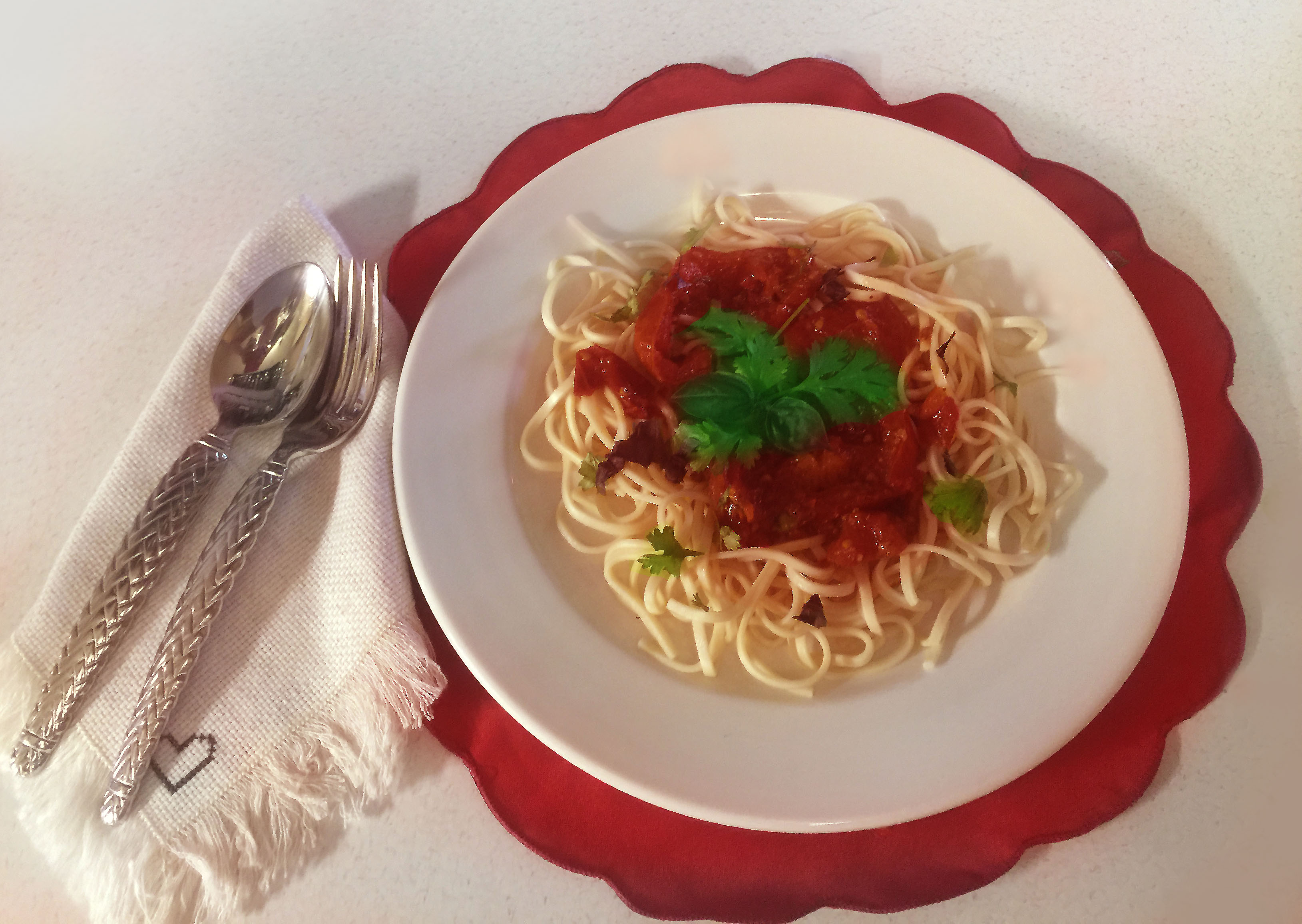
 DID YOU KNOW? HEIRLOOM Tomatoes are increasing in popularity by the organic veggie consumers because they are a more natural and flavourful fruit. TOMATOES are armed with healthy Lycopene fighting free radical and the UV tomato skin battles cancer cells – every time you eat a tomato. The amount of bioavailable lycopene increases by cooking the tomato compared to eating them raw. When you add a bit of healthy fat like olive oil, your body absorbs the lycopene more readily – four times more in fact. That’s how you maximize the body readiness of carotenoids from a tomato.This popular nightshade fruit is more powerful than an apple. Like carrots, the tomato is also good for your eyes.









 Simply Splendid Food